Please note: This text was written by me (the human), though minor errors were corrected by an AI tool. Does this correction make the text AI-generated?
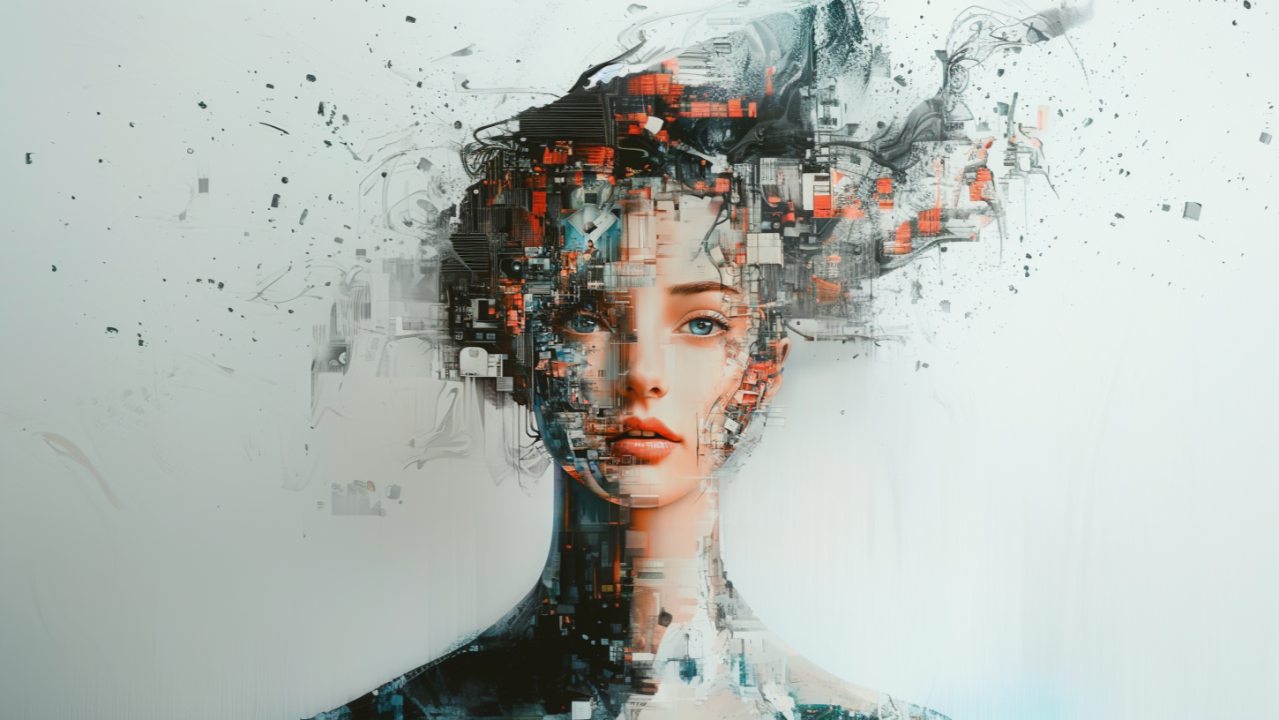
And what about the picture connected to this text? It was prompted by me (the human) but generated by an AI tool. Does it belong to me? Theoretically, yes. Ethically, it should belong to everyone whose data was ever used to create the datasets—the very foundation of generative AI systems. These datasets have often been created without (proper) consent, as technology moves faster than regulations can keep up. In a nutshell, the creation should belong to all of us collectively, and especially to every individual creator whose work was (ab)used in this case.
There is nothing more refreshing to me than asking big philosophical questions on a Sunday afternoon.
This scenario reminds me of something else. Historically, many great things—cities, countries, economies, companies—were built on the backs of slaves and invisible people, including children, who had no rights, or whose rights were taken from them for profit. Perhaps this time around, anyone who has ever created something and posted it online is unknowingly contributing to the greater good of AI systems, often without their consent or recognition.
This, in turn, reminds me of yet another promise: social media providers once promised us greater connection, yet now we clearly see how much damage it has caused—and continues to cause—to our communities. Addiction, isolation, loneliness, mental health challenges, loss of identity, and fraud are just a few examples. Last year, at the AI For Good Global Summit, I heard Tristan Harris from the Center for Humane Technology say that AI is essentially “social media on steroids,” implying far greater dangers than we currently foresee—from deepfakes and stolen identities, to increased polarization and the erosion of human creativity.
Let’s face it: if it becomes easier to have texts written for you, why would you invest time and effort into writing them yourself? (Unless, of course, you’re like me or any other creative who deeply values the creative process.) Perhaps soon, it will become nearly impossible to distinguish between human- and AI-written content, and our own creativity might vanish, becoming a forgotten skill. This may sound alarming, but it mirrors the way many great civilizations of the past collapsed—by losing their core skills and creativity. Are we already there, or is this just the beginning?
It seems we’re standing on the edge of one of the greatest—and potentially scariest—breakthroughs in human history. A breakthrough presented as human advancement but carrying risks we can hardly imagine. The future is something we will actively create, and it is crucial that all of us get involved now to ensure every voice is heard and all ideas are thoughtfully considered.
Returning to the original creators: I’m not sure exactly what we can do about this. How can we ensure that our original works are used ethically by AI companies? (Frankly, we should be compensated for this use.) And how can we genuinely leverage AI for the benefit of everyone involved?
Just asking for a friend.
#EthicalAI #AI #AIEthics #Creativity #HumanTechnology #CreativeRights #AIforGood #DataPrivacy #FutureOfAI #TechEthics #CreativeCommunity #DigitalResponsibility
And here are a few creative invitations from our extended communities:
- Future of Humanity goes to Basel! All artists are invited to apply to become featured here.
- Submit Your Wish & send it with us to the Moon here.
- Syed Abdur Rahman asks: “How can we create digital experiences from real-world, physical artworks that retain their original spirit while presenting new perspectives?” This is the question being explored at adrop.art to give artists new ways to connect with digital audiences. Connect with Syed to explore more.
- Don Diffang from Do Me A Favour Buddy http://dmafb.squarespace.com is seeking (unpaid) volunteers (18+) for an 8-week research study exploring how personalised acts of kindness impact wellbeing, with just 10-15 minutes of daily participation required and follow-up assessments to track long-term benefits. Learn more and apply by March 31st at https://forms.gle/RY8baSoJAX3AAQQG6 to help develop evidence-based approaches to improving wellbeing through simple acts of kindness.
- Oswald H. König Tafur runs Agora der Zukunftsvögel in April. Join him here.
Responses